

Key Takeaways:
- Advances in roofing materials support energy efficiency and environmental stewardship for modern buildings.
- Reflective, vegetative, and technologically advanced systems add value and resilience to commercial roofs.
- Long-term financial savings and durability are key outcomes of integrating innovative roofing solutions.
As commercial architecture continues to evolve, building owners and developers face new demands for energy efficiency, performance, and environmental responsibility. Choosing advanced roofing materials has become essential, as the right solutions can reduce long-term operating costs, improve occupant comfort, and boost sustainability. For comprehensive details and expert insight into selecting and installing next-generation roofing systems, click here.
The evolution of roofing materials now goes beyond traditional structures, incorporating smart technologies, environmental enhancements, and energy-saving features. Businesses are exploring these cutting-edge options to future-proof their properties and align with green building trends shaping the industry landscape.
Updated roofing strategies no longer focus on weather protection, they also offer measurable improvements in energy and maintenance savings. Innovations such as cool roofs, living vegetation, and IoT-driven monitoring are proving transformative. Building stakeholders striving for a competitive edge, improved asset value, and long-term sustainability are wise to investigate these modern products firsthand.
The adoption of today’s most progressive roofing solutions not only impacts operational costs; it also positions commercial properties for regulatory compliance, tenant demands for wellness, and ongoing corporate reputational benefits. These innovations can even help earn LEED credits and other certifications. Business owners, architects, and property managers should thoroughly evaluate the latest offerings for both new projects and retrofit applications.
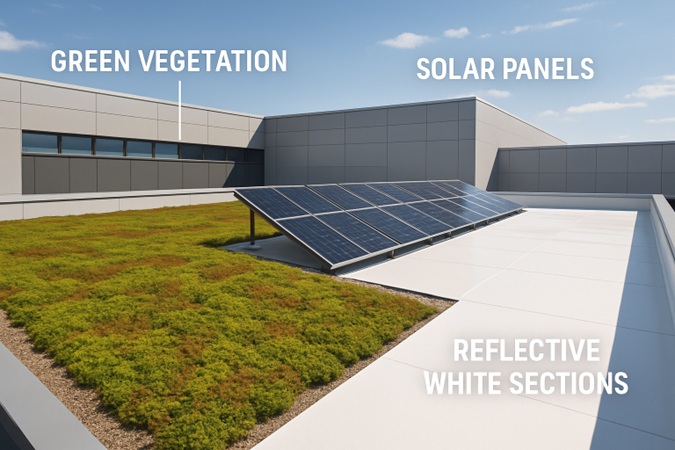
Table of Contents
Reflective Roofing Materials
Reflective, or “cool,” roofing materials represent a major leap forward in energy efficiency for commercial properties. These systems are engineered to reflect sunlight and absorb minimal heat, helping maintain cooler roof temperatures. Commonly using light-colored or specially coated surfaces, reflective roofs can lower a building’s surface temperature by up to 50°F on hot days, significantly reducing HVAC loads. This innovation is especially vital in urban environments, where the urban heat island effect can dramatically increase cooling costs. According to the U.S. Department of Energy, cool roofing products can cut energy bills and extend roof longevity by mitigating thermal stress.
Green Roofs
Green roofs feature living vegetation layers that deliver substantial environmental and economic benefits for commercial developments. They help insulate buildings naturally, support stormwater management, and foster local biodiversity. During summer, green roofs can cool rooftop surfaces by 30°C (54°F), improving urban microclimates and reducing peak electricity demand. According to The New York Times, green roofing solutions not only advance climate resilience but also boost real estate value and provide wellness benefits for occupants.
Smart Roofing Systems
Integrating digital intelligence directly into the roof structure, smart roofing systems harness sensors and the Internet of Things (IoT) to gather data on moisture, heat, movement, and potential leak development. Real-time monitoring greatly improves emergency response, minimizes costly damages, and supports predictive maintenance, all while optimizing building performance. These systems are particularly advantageous for properties exposed to extreme weather or with large roof surfaces where manual inspections are challenging. The proactive nature of smart roofs helps ensure the structural integrity and reliability of essential building assets.
Advanced Roof Coatings
Modern roof coatings, especially silicone-based options, are raising the bar for durability, waterproofing, and solar reflectivity. Advanced coatings can reflect up to 90% of damaging UV rays, safeguarding the underlying structure and reducing air conditioning costs. Their high elasticity enables them to expand and contract with extreme temperatures, reducing the likelihood of cracks and degradation. These products are ideal for re-coating aging roofs and prolonging the lifespan of significant commercial investments by preventing leaks and premature wear, as detailed by Architectural Digest.
Metal Roofing Panels
Metal roofing panels remain one of the most resilient and versatile options for commercial buildings. Innovations have resulted in lighter structures, high-performance protective finishes, and customizable styles. Aluminum and coated steel panels offer corrosion resistance along with reflective pigments that lessen solar absorption. These roofs can last 40–70 years, are compatible with solar arrays, and are recyclable at the end of life, supporting sustainability and circular-economy initiatives. Lightweight panels also mean reduced structural loads, easing retrofit projects and expanding design flexibility for architects.
Thermoplastic Polyolefin (TPO) Membranes
TPO membranes are dominating the market for flat and low-slope commercial roofs. Their unique properties include heat reflectivity, long-term flexibility, and UV resistance. Seam-welded installation ensures airtight waterproofing, lowering the risk of leaks and water intrusion. TPO’s ease of installation and maintenance, combined with lower material costs and its lightweight structure, make it a leading choice for new construction and membrane replacements. These features help building owners achieve both budgetary and performance targets without sacrifice.
Conclusion
Innovative roofing materials are integral to building a high-performance, environmentally conscious, and future-ready commercial property. Whether deploying reflective coatings, cultivating green roofs, adopting smart technology, or utilizing advanced metals and membranes, today’s solutions deliver significant returns. Comprehensive evaluation and timely adoption of these innovations enable property owners to realize improved energy savings, resilience, and market competitiveness for years to come.