

Key Takeaways:
- Small gutter issues can send water toward siding, walkways, landscaping, and the foundation.
- Many warning signs are visible from the ground, so homeowners do not need to climb onto the roof to begin an inspection.
- Overflow, sagging, loose seams, dents, and pooling soil should be addressed before the next major rainfall.
- Downspouts should carry runoff to a safe area away from the house.
- Photos and notes after a storm can make later repair decisions much easier.
Gutters have one basic but important job: collect roof runoff and guide it away from the home. When a section is clogged, loose, tilted, or disconnected, water can spill near the exterior walls, creating problems that worsen with each storm. Homeowners who notice repeat overflow or visible damage may need gutter and downspout repair in Dallas, Fort Worth to address the cause rather than simply clean up the symptom.
A short inspection before storm season, another during the fall leaf drop, and a ground-level review after severe weather can reveal drainage concerns early. Heavy rain moves quickly across a roof, so a weak joint or a blocked outlet may go unnoticed until the gutter system is under real pressure.
Table of Contents
Why Gutter Checks Matter Before Storm Season
Water not reaching the downspout must go somewhere, possibly running down siding, soaking fascia, splashing doors, eroding mulch, or pooling near the foundation. Repeated storms can worsen small issues. Regularly observing helps homeowners detect changes in water flow before moisture causes damage. A seasonal check isn’t a major project; it ensures gutters stay attached, downspouts connect properly, and runoff flows away from the building. Watching during rain reveals where water actually travels.
Common Signs Of Gutter Trouble
Walk slowly around the entire property, looking up at the roofline and down at the soil below it. One sign may have several possible causes. For example, overflow can result from leaves, a blocked outlet, an improper slope, loose hangers, or rainfall exceeding the system’s capacity.
- Water spilling over the front or back edge during rain
- Gutters sagging, bowing, or pulling away from the roofline
- Open seams, detached end caps, visible cracks, rust, dents, or holes
- Dark streaks, peeling paint, or discoloration on siding and fascia
- Downspouts that wobble, separate, or appear crushed
- Heavy leaf buildup, plant growth, or packed grit in accessible areas
- Washed-out mulch, soil erosion, or standing water near discharge points
A Safe Ground-Level Inspection
Start after the storm has passed and the area is safe. Choose dry conditions whenever possible, then use binoculars or a phone camera with zoom to inspect hard-to-see areas. Avoid climbing onto a wet roof or using a ladder near damaged, unstable, or energized areas.
- Walk the full perimeter of the home and inspect the roofline.
- Look for bent, separated, loose, or visibly sagging gutter sections.
- Follow each downspout from the top connection to its discharge point.
- Check beneath gutters for stains, peeling paint, soft-looking trim, or drips.
- Inspect the soil for pooling, washout, or water flowing back toward the home.
- Check attic spaces or ceilings only when they can be accessed safely.
What To Check After Wind, Hail, Or Heavy Rain
Different weather events leave different clues. High wind can loosen hangers and pull a section away from the fascia. Hail can dent metal gutters and may also affect nearby roofing materials. Heavy rain can expose blocked outlets, leaking joints, poor pitch, or drainage routes that leave water beside the house.
Before removing debris or making a temporary adjustment, take clear photos. Capture a wide view of the affected side of the home, a close image of the damaged area, and any related staining, erosion, or pooling. Record the storm date, the date you noticed the damage, active leaks, and any temporary steps taken to limit water entry.
Downspout Placement & Runoff Control
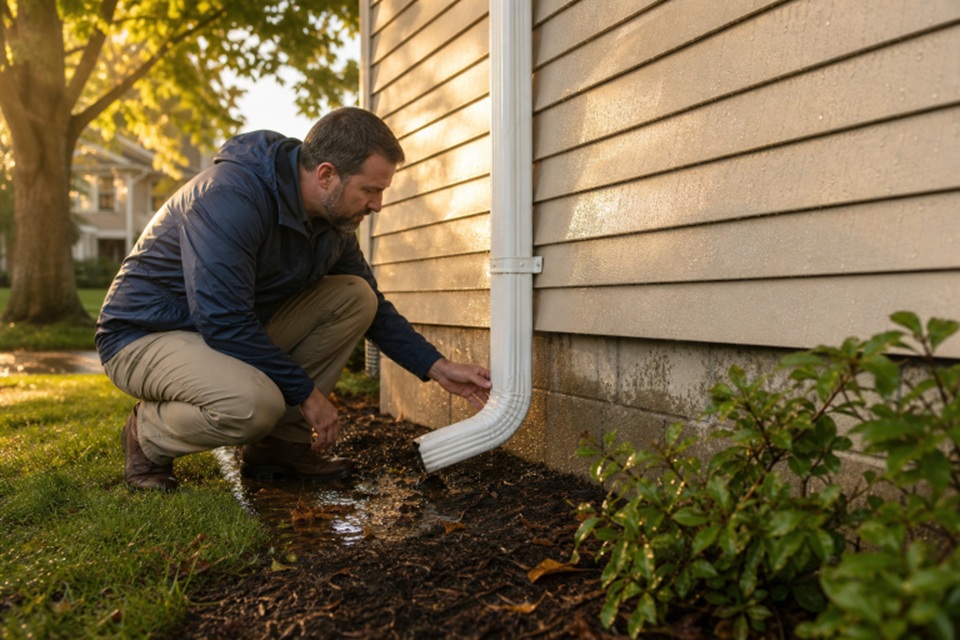
The downspout outlet is as important as the gutter above. Water discharged near the foundation can saturate soil, and water crossing walkways can cause slippery surfaces and puddles. The EPA states redirecting downspouts to landscaped areas can reduce runoff, but the path shouldn’t cause damage or unsafe conditions. Before changing discharge routes, consider lot grading, property lines, utilities, nearby structures, and local rules. A solution suitable for one property might direct water to a neighbor’s yard, driveway, or wall, causing issues.
Simple Maintenance Steps Homeowners Can Handle
- Remove loose leaves and debris from safely accessible areas.
- Check that visible outlet openings are not packed with sediment.
- Clear debris from splash blocks and the ground around discharge points.
- Look for visible fasteners that have backed out or brackets that appear loose.
- Trim branches that repeatedly drop leaves onto the roofline.
- Watch the next rainfall to confirm water follows the intended path.
Stop when work requires roof access, heavy lifting, specialized tools, structural repairs, or work near power lines. A quick inspection is valuable, but it should not create a fall or electrical hazard.
When A Small Problem Needs Faster Attention
Some conditions should not wait until the next seasonal maintenance day. Act promptly if water is entering the attic or living space, a gutter section is hanging away from the home, fascia or soffit feels soft, water repeatedly pools beside the foundation, or the same seam leaks after several patch attempts. Damage affecting multiple exterior areas after a single storm also warrants closer evaluation.
Repair Or Replace? Questions To Ask
A limited repair may be appropriate when the damage is isolated, and surrounding materials remain sound. Replacement may be worth discussing when sections are severely corroded, repeatedly fail, or no longer fit the roof and drainage layout. Ask what caused the problem, whether adjacent trim is affected, what materials and fasteners will be used, and how water flow will be tested afterward.
A Practical 30-Minute Homeowner Checklist
- Check the roofline from the ground.
- Look for sagging, dents, gaps, cracks, and loose sections.
- Inspect downspout connections and outlet areas.
- Look for stains beneath the gutter line.
- Check for erosion or pooling near the foundation.
- Clear safe-to-reach debris and take photos of concerns.
- Watch for the next rain for overflow or improper drainage.
- Arrange an inspection when damage is recurring, hidden, or inaccessible.
Storm-ready gutter care begins with simple observation. FEMA provides information and resources to help homeowners understand how water moves around a property. A few minutes spent checking attachments, water flow, and discharge areas can help identify problems before they affect the home.