

Key Takeaways:
- A clog that returns shortly after clearing may be a sign of a damaged sewer pipe, not just a one-time blockage.
- Roots, broken joints, pipe offsets, low spots, grease, and collapsed sections can all restrict flow.
- When multiple fixtures drain slowly or gurgle, the issue may be in a shared sewer line.
- A camera inspection can help locate the problem before major digging or repair work begins.
- Repeated chemical drain treatments can create more problems without correcting pipe damage.
Table of Contents
Recurring Sewer Clogs Are More Than An Inconvenience
A drain that clogs once may be caused by hair, soap residue, food waste, or an object lodged near one fixture. A drain that clears and then backs up again within days or weeks deserves a closer look. For homeowners facing recurring problems, sewer line repair and replacement in Sandy Utah, can address the underlying pipe condition instead of simply removing the latest blockage.
That distinction matters in Sandy homes because the sewer lateral is hidden underground. A line can appear to work normally after snaking or cleaning, then begin gurgling, draining slowly, or backing up again after ordinary laundry, showers, or dishwasher use. Clearing the symptom may temporarily restore flow, but it does not repair a cracked, shifted, or deteriorating pipe.
Common Reasons Sewer Clogs Keep Returning
Tree Roots Entering Weak Points
Roots can grow into small openings around aging joints, cracks, or damaged pipe connections. Once inside, they create a catch point for paper and debris. A cleaning may cut through roots and improve drainage, but roots can return if the opening remains.
Broken, Collapsed, Or Offset Pipe Sections
A cracked or partially collapsed pipe can trap waste as it moves through the line. An offset joint occurs when connected pipe sections shift out of alignment, creating a lip that catches solids. These conditions are more likely to create repeat clogs than a simple buildup near a sink or toilet.
Low Spots & Internal Buildup
A sagging section of pipe can retain wastewater and solids rather than fully carry them away. Grease, wipes, paper products, and other foreign material can also create blockages, especially where the pipe already has a rough interior, root intrusion, or misalignment.
Symptoms That Point To A Shared Sewer-Line Problem
- One slow sink or tub: This can indicate a clog in a nearby fixture or branch line. Basic cleaning may be appropriate if the problem does not return.
- Several slow drains at once: A restriction may be developing in the shared sewer line serving the home.
- Toilet gurgling when water runs elsewhere: A partial blockage can interfere with normal airflow and drainage.
- Water or sewage appearing at a floor drain: Stop using water fixtures because the line may be severely blocked.
- Sewage odor, wet soil, or an unusually lush patch of grass: These signs can justify a professional evaluation for a possible underground leak.
Why A Camera Inspection Can Change The Repair Plan
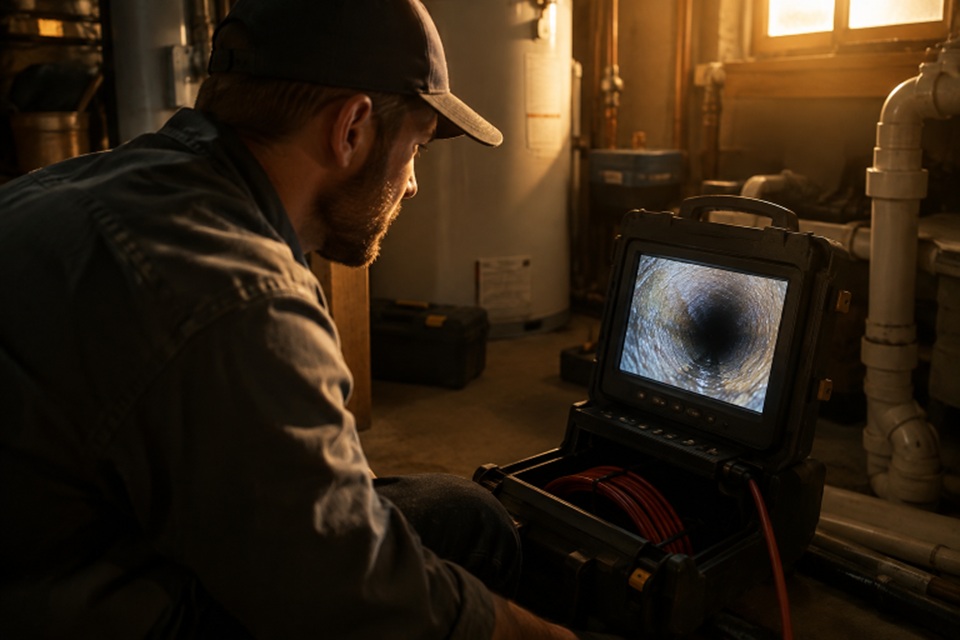
A camera inspection allows a technician to view the inside of an accessible sewer line and identify visible roots, cracks, standing water, separated joints, buildup, or a collapse. Video inspection inside pipelines can reduce guesswork by showing both the type of defect and its approximate location.
Ask whether you can receive a copy of the footage, images, or a written summary. A useful inspection report should identify the pipe material when known, note the distance to each issue, explain whether the camera reached the public connection, and distinguish between a blockage that can be cleaned and pipe damage that needs repair.
Cleaning, Repair, Lining, Or Replacement?
The right solution depends on what the inspection finds. Cleaning is often suitable when the pipe is structurally sound, and debris is the only issue. A spot repair may make sense when damage is limited to one accessible area. Replacing a longer section can be more practical when several nearby defects affect the same run.
Full replacement may be considered when a line has widespread deterioration, repeated collapse, or multiple damaged joints. Some properties may also be candidates for trenchless methods, which can reduce surface excavation in suitable conditions. Pipe material, alignment, depth, access points, and the location of driveways, patios, trees, and landscaping all affect whether that approach is feasible.
What To Do During A Sewer Backup
- Stop flushing toilets and running sinks, showers, washing machines, and dishwashers.
- Keep children and pets away from affected areas.
- Avoid mixing chemical drain products or attempting repeated chemical treatments.
- Take photos of the damage before cleanup, in case an insurance claim is necessary.
- Contact the local utility if the issue may involve the public sewer main.
- Use qualified cleanup help when sewage has entered the home, since sewage-contaminated water may require professional cleaning and disinfection. For buildings affected by sewage or other contaminated water, federal guidance recommends hiring professionals with experience cleaning and repairing contaminated-water damage.
Questions To Ask Before Approving Sewer Work
- Which fixtures are affected, and how often has the backup happened?
- Where is the sewer cleanout, and was the full accessible line inspected?
- What does the camera footage show at the damaged location?
- Is cleaning likely to be temporary, or is there visible structural damage?
- Does the estimate separate diagnosis, excavation, permits, repair, and surface restoration?
- Is the problem on the private lateral or potentially in the public main?
Common Questions About Repeat Clogs
Can a sewer line be cleaned without being repaired?
Yes. Cleaning can restore flow when the pipe itself remains intact. If roots, cracks, or shifted joints are present, the blockage may return until the damaged area is corrected.
How many clogs are too many?
There is no universal number, but a clog that returns within weeks, affects multiple fixtures, or causes a sewage backup should be investigated rather than another quick clearing.
Do roots always mean full pipe replacement?
No. The decision depends on the extent of root intrusion, the condition of nearby pipe sections, and whether the line has additional defects.
Make The Next Decision Based On Evidence
For Sandy homeowners, a recurring sewer clog is often a warning that something below ground needs attention. Start by noting the affected fixtures and the frequency of the problem. If several drains are involved or backups keep returning, request camera evidence before paying for repeated cleaning. A repair plan based on the actual condition of the pipe can help prevent another temporary fix from becoming the next emergency.