

Key Takeaways:
- A heat pump provides heating and cooling by moving heat rather than producing it through combustion.
- North Louisiana’s generally mild winters can make heat pumps a practical whole-home comfort option.
- Proper sizing, duct condition, and installation quality matter as much as the equipment’s efficiency rating.
- SEER2 describes seasonal cooling efficiency, while HSPF2 describes seasonal heating efficiency.
- Backup heat can be useful during freezing weather, defrost cycles, or unusual cold snaps.
- Filter changes, outdoor-unit clearance, and routine professional service support dependable performance.
For homeowners from Shreveport and Bossier City to Ruston and surrounding communities, a heat pump can be an appealing way to handle humid summers and comparatively mild winters with a single system. Professional heat pump repair and installation in North Louisiana starts with looking beyond the equipment label to consider the home, its ducts, insulation, electrical service, and everyday comfort needs. The best system is not automatically the largest or the highest-rated model. A well-matched heat pump should maintain steady indoor temperatures, manage summer humidity, and operate efficiently through the weather patterns common across North Louisiana.
Table of Contents
How Heat Pumps Work
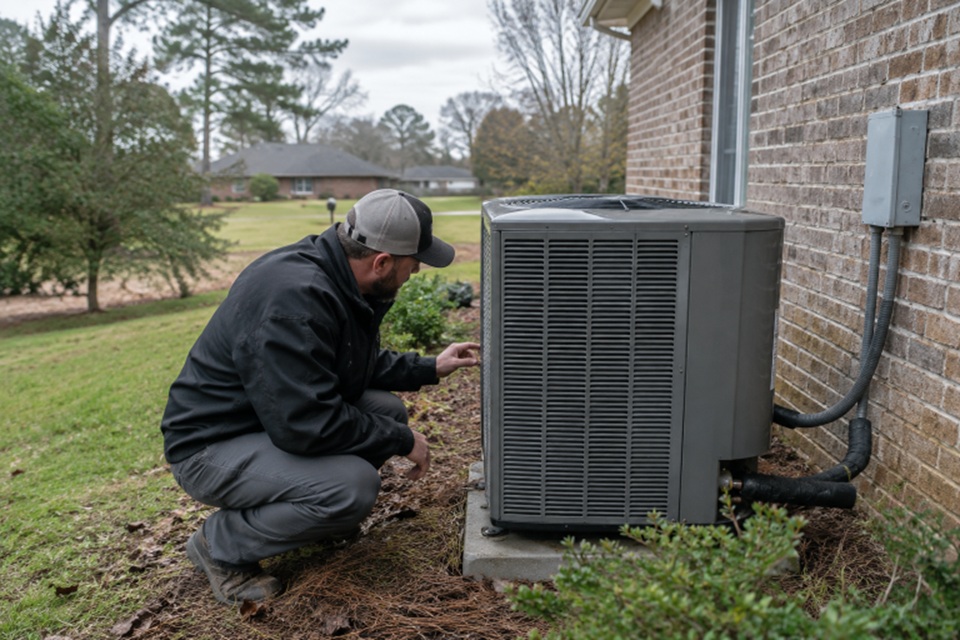
A heat pump uses a refrigeration cycle to transfer heat. In cooling mode, it pulls heat from indoor air and releases it outdoors. In heating mode, the process reverses, allowing the system to collect heat from outdoor air and move it inside. The outdoor unit can run in winter because the outdoor air still contains heat, even when it feels cold. A reversing valve changes the direction of refrigerant flow between heating and cooling. During damp or cold conditions, frost may form on the outdoor coil. The system may briefly enter a defrost cycle to clear that frost, which can cause a temporary change in airflow, sound, or the air temperature at the vents.
Why Mild Winters Matter In North Louisiana
North Louisiana homes often need substantial cooling for much of the year, while winter temperatures can range from mild days to occasional freezing. That combination can favor an air-source heat pump, since it handles both cooling and heating without separate air-conditioning equipment. The U.S. Department of Energy classifies Louisiana as a hot-humid state and among the Southeast states for heat-pump efficiency guidance, reinforcing the importance of evaluating cooling and heating performance together. Still, every home is different. Before selecting equipment, consider how often your area experiences freezing weather, whether natural gas is available, the age of the electrical panel, the condition of existing ducts, and whether every room needs central conditioning.
Heat Pump Types To Compare
Central Air-Source Heat Pumps
A ducted central heat pump sends conditioned air through supply vents and returns it through return-air pathways. It can be a sensible replacement when a home already has usable ductwork, but leaky, undersized, or poorly insulated ducts can reduce comfort and waste conditioned air.
Ductless Mini-Splits
Ductless systems pair an outdoor unit with one or more indoor air handlers. They can work well for additions, converted garages, older homes without ducts, or rooms that stay uncomfortable. Zoning is a major advantage, but indoor head placement should be planned to ensure air circulates effectively.
Packaged & Dual-Fuel Systems
Packaged heat pumps house major components in a single outdoor cabinet and are common where indoor mechanical space is limited. A dual-fuel system combines a heat pump with a gas furnace, allowing the controls to use the heat pump in milder weather and switch to the furnace when conditions or operating costs make that preferable.
Understanding Efficiency Ratings
Compare complete matched systems, not isolated numbers. SEER2 measures seasonal cooling efficiency, HSPF2 measures seasonal heating efficiency, and EER2 reflects cooling efficiency under specific test conditions. Capacity describes how much heating or cooling the equipment can deliver, while low-temperature performance shows how output changes as outdoor temperatures fall. The proper sizing guidance for air-source heat pumps from ENERGY STAR emphasizes that both oversized and undersized equipment can struggle to deliver comfort. Higher ratings may be worthwhile, but only after confirming that the system fits the home and can be installed and serviced correctly.
Why Proper Sizing Matters
Square footage alone cannot determine heat-pump size. A dependable calculation considers insulation, window area and orientation, ceiling height, air leakage, occupancy, shade, appliances, and duct losses. Ask the contractor to perform a Manual J load calculation rather than simply matching the size of the old system.
- Oversized systems can start and stop frequently, create uneven temperatures, and remove less humidity during summer operation.
- Undersized systems may run for long periods, fall behind during extreme weather, and rely more heavily on auxiliary heat.
When Backup Heat Helps
Auxiliary heat is a supplemental heat source that may operate when outdoor conditions are especially cold, during defrost, or when the thermostat is raised several degrees at once. Emergency heat is a manual setting typically intended for use when the heat pump itself is unavailable, and backup heat must carry the load. Electric heat strips are common, while a dual-fuel furnace offers an additional backup option. Portable heaters should be used only for limited temporary needs, placed on stable surfaces away from fabrics and furniture, and never treated as a replacement for repairing a failed central system.
Installation Details That Matter
A careful installation includes more than setting an outdoor unit beside the house. The contractor should confirm the load calculation, inspect the ducts and return paths, verify electrical capacity, provide a stable, well-drained equipment base, and protect the unit from blocked airflow and roof runoff. A startup should include testing heating, cooling, airflow, defrost operation, thermostat controls, and safety functions.
Maintenance & Repair Decisions
Homeowners can support performance by changing or cleaning filters as directed, keeping leaves and stored items away from the outdoor unit, leaving the supply and return vents open, and watching for persistent ice, new noises, or unexplained changes in energy use. Refrigerant work, electrical repairs, panel removal, and safety-control adjustments are the responsibility of trained technicians. Repair may make sense for a newer system with an isolated problem and a solid service history. Replacement deserves consideration when failures repeat, a compressor or coil fails, parts are difficult to obtain, or a major repair approaches a meaningful share of replacement cost. Compare repair cost, warranty coverage, expected remaining service life, comfort concerns, and installation improvements before deciding.
Common Homeowner Questions
Can one heat pump replace both a furnace and an air conditioner?In many North Louisiana homes, yes. The right answer depends on the home’s load, ducts, electrical setup, and whether backup heat is desired for colder weather.
Why does the air feel cooler during winter operation?A brief change can occur during defrost. Ongoing cool air may point to a thermostat setting, airflow, refrigerant, or control problem that should be evaluated.
What should I ask an installer?
- Will you perform a Manual J load calculation?
- Will you inspect and test the existing ductwork?
- How much heating capacity will the system provide in colder weather?
- When will auxiliary or backup heat activate?
- Which efficiency ratings apply to the complete matched system?
Conclusion
A successful heat-pump purchase in North Louisiana begins with the home, not a sales label. Choose equipment suited to local weather, size it using a real load calculation, and consider the home’s insulation, windows, ductwork, and existing electrical system before making a final decision. Proper installation is also important because even well-matched equipment may not perform as expected if ducts leak, airflow is restricted, or controls are incorrectly configured. Homeowners should also understand basic maintenance needs, including filter replacement, outdoor-unit cleaning, and regular professional inspections. Those steps can support consistent performance and help manage energy use through humid summers, cool winter days, and the occasional hard freeze. Planning for both heating and cooling needs can also make the system more practical year-round.
Choosing, Sizing, & Maintaining A Heat Pump In North Louisiana